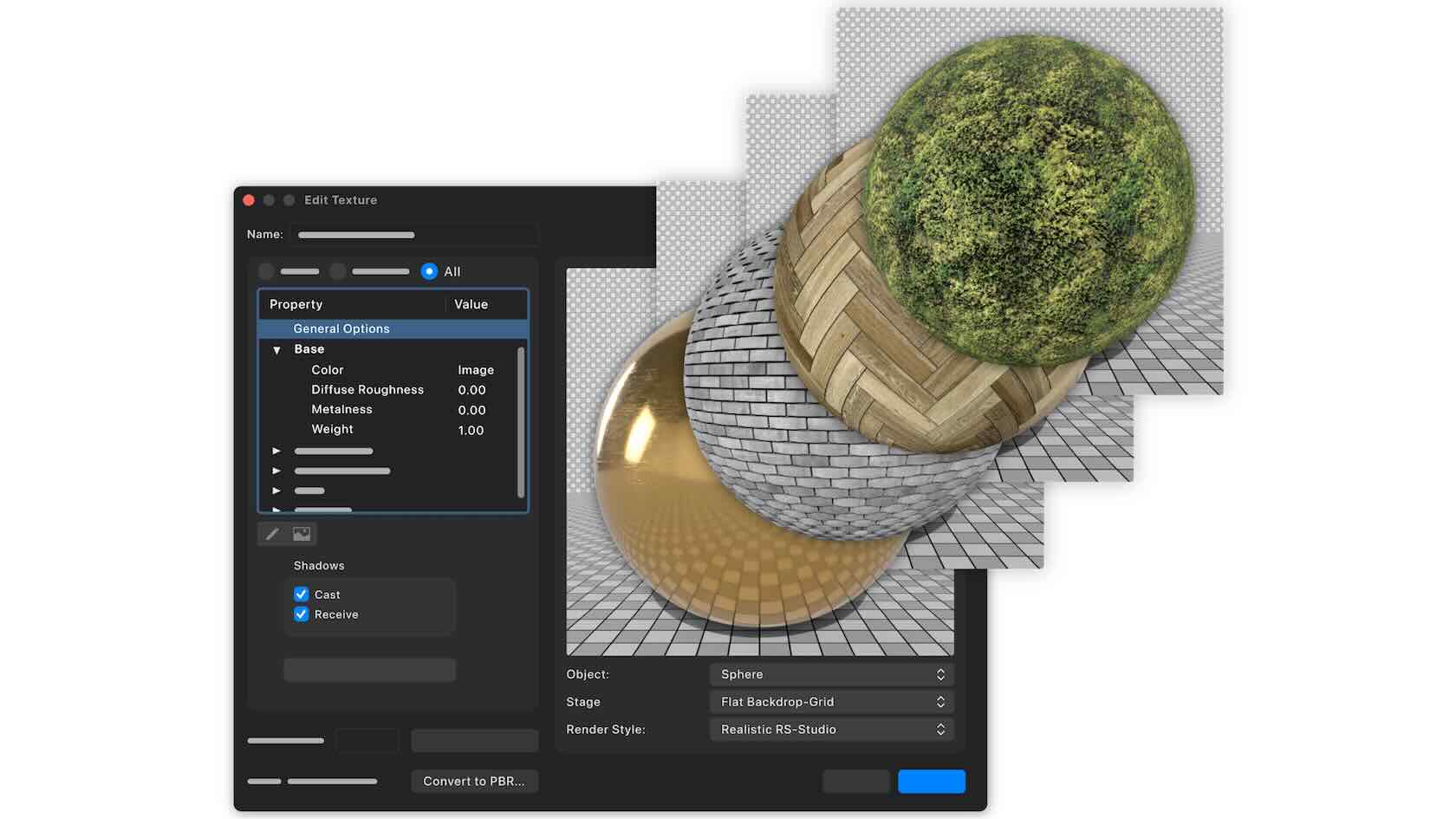
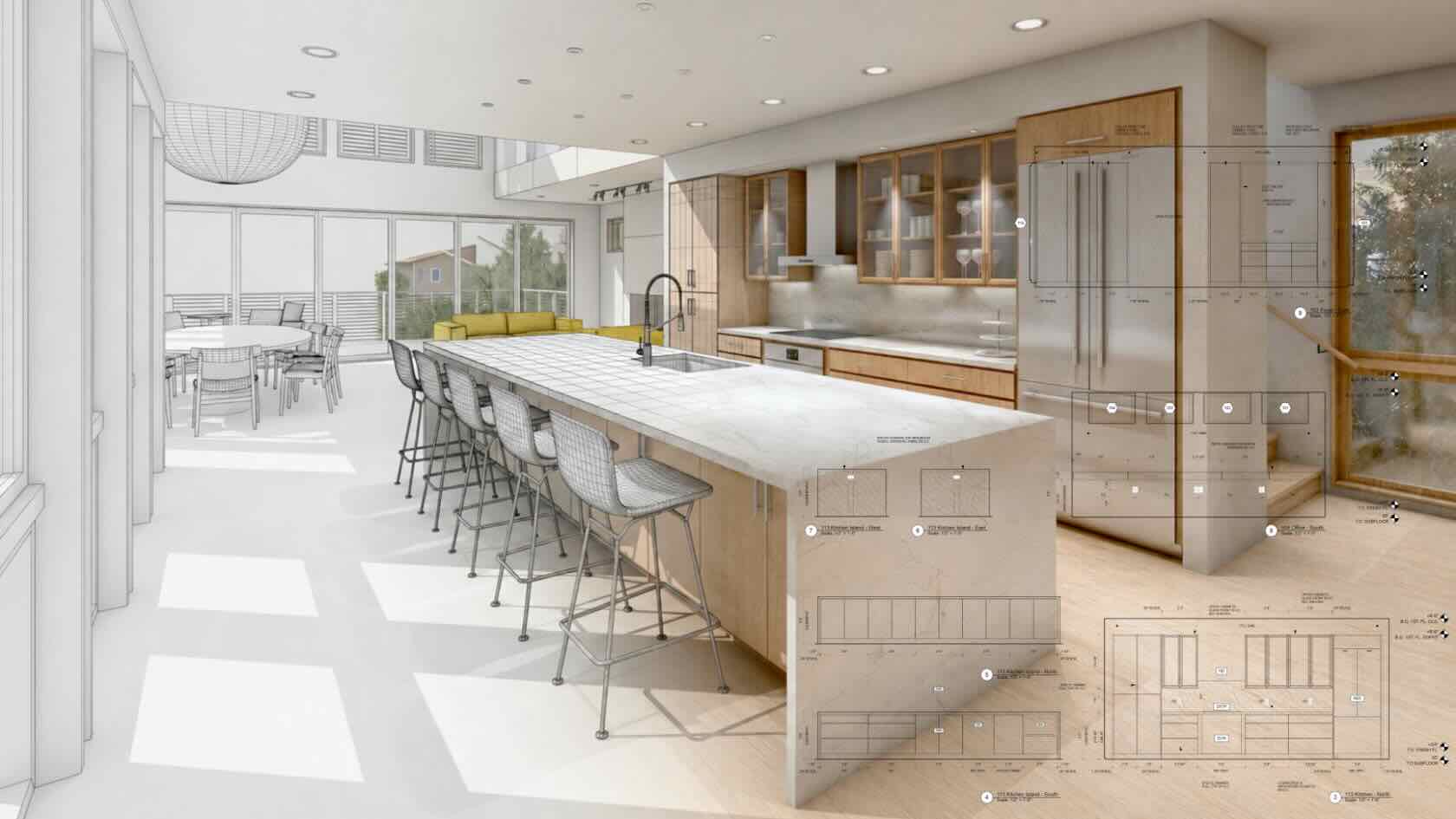
Create stunning textures once, then enjoy the payoff everywhere you work. A modern PBR texture system lets you build richer, more realistic materials with live previews, convert old textures in a click, and send those same render ready surfaces straight into dedicated visualization tools—so your visuals all share the same high-quality materials without extra rework.
Discover how to get started with this video.
All Industries
All Industries
12m
Beginner
Learning Objectives
Identify the core OpenPBR property categories — Base, Specular, Transmission, Coat, Emission, and Geometry — and describe how each one shapes a material's response to light.
Create a Renderworks texture in the Edit Texture dialog by assigning colors or image maps to properties, setting texture size and surface hatch, and using the Basic, Modified, and All display options along with the live preview to refine results.
Apply PBR properties to real scenarios such as fabric, masonry, translucent, and natural materials, and convert legacy pre-2027 textures to PBR while preserving the original resource.
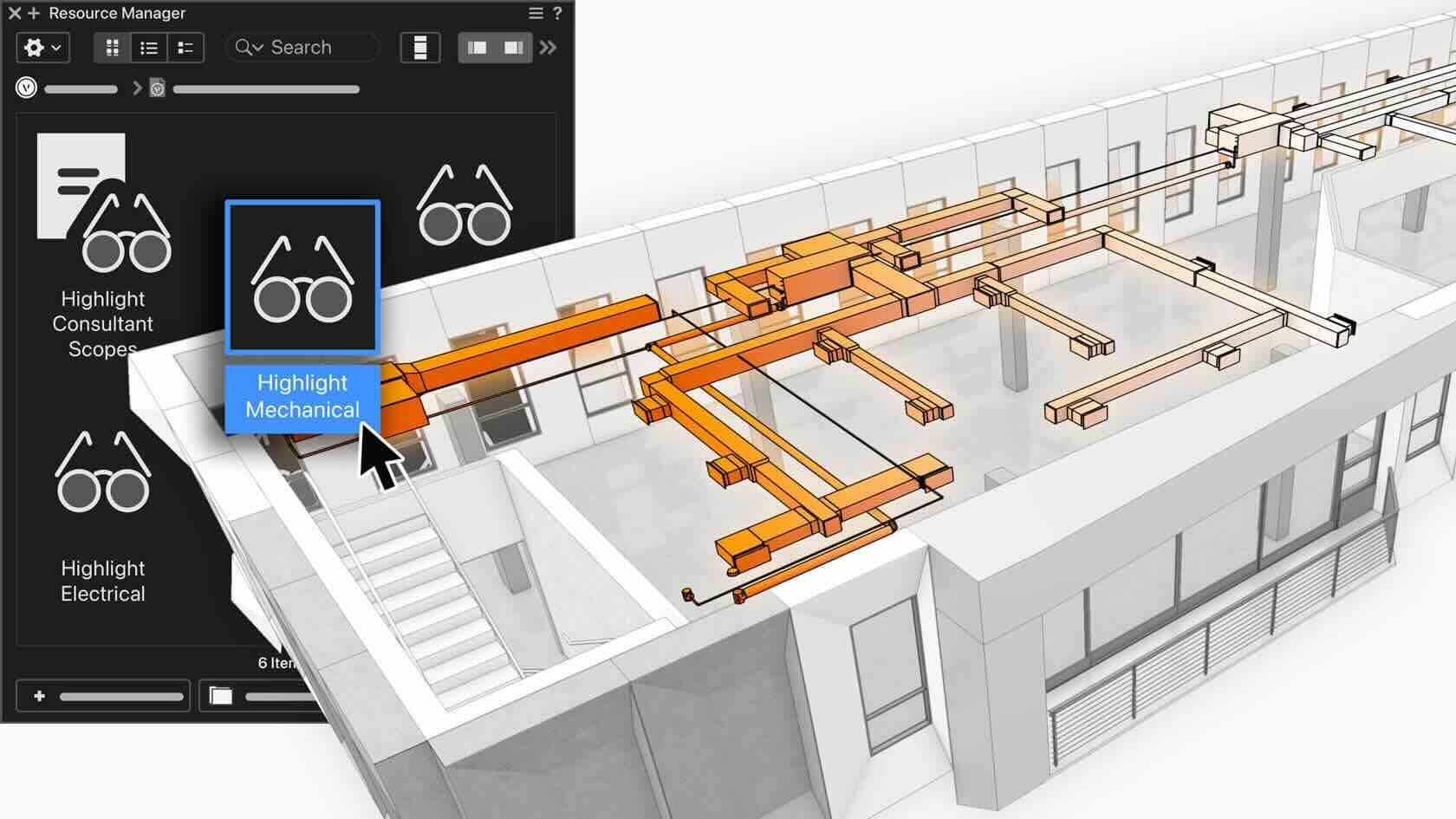
Data Visualization lets you graphically see the data in your design without changing the attributes of the underlying objects. This video introduces you to Data Visualization resources, which are managed in the Resource Manager and sharable with others. Data Visualization Sets, which combine multiple individual Data Visualizations, are also featured. Sets enable individual Data Visualizations to be easily activated together or uniquely, with control over their priority order. You will see how to build a Data Visualization and a Set and various ways to apply them to your model and views.
All Industries
All Industries
10m
Beginner
Learning Objectives
Explain how data visualizations act as a graphic overlay that overrides attributes or visibility based on object data without altering the underlying geometry, and locate them as resources in the Resource Manager.
Create an individual data visualization by setting its type (Change Attributes or Hide), object criteria, and display criteria by value or range, including the option to apply attributes to associated data tags.
Build and apply data visualization sets, controlling priority order and the Use Only First Applicable behavior, and activate them from the Resource Manager, the View bar dropdown, viewports, or saved views.
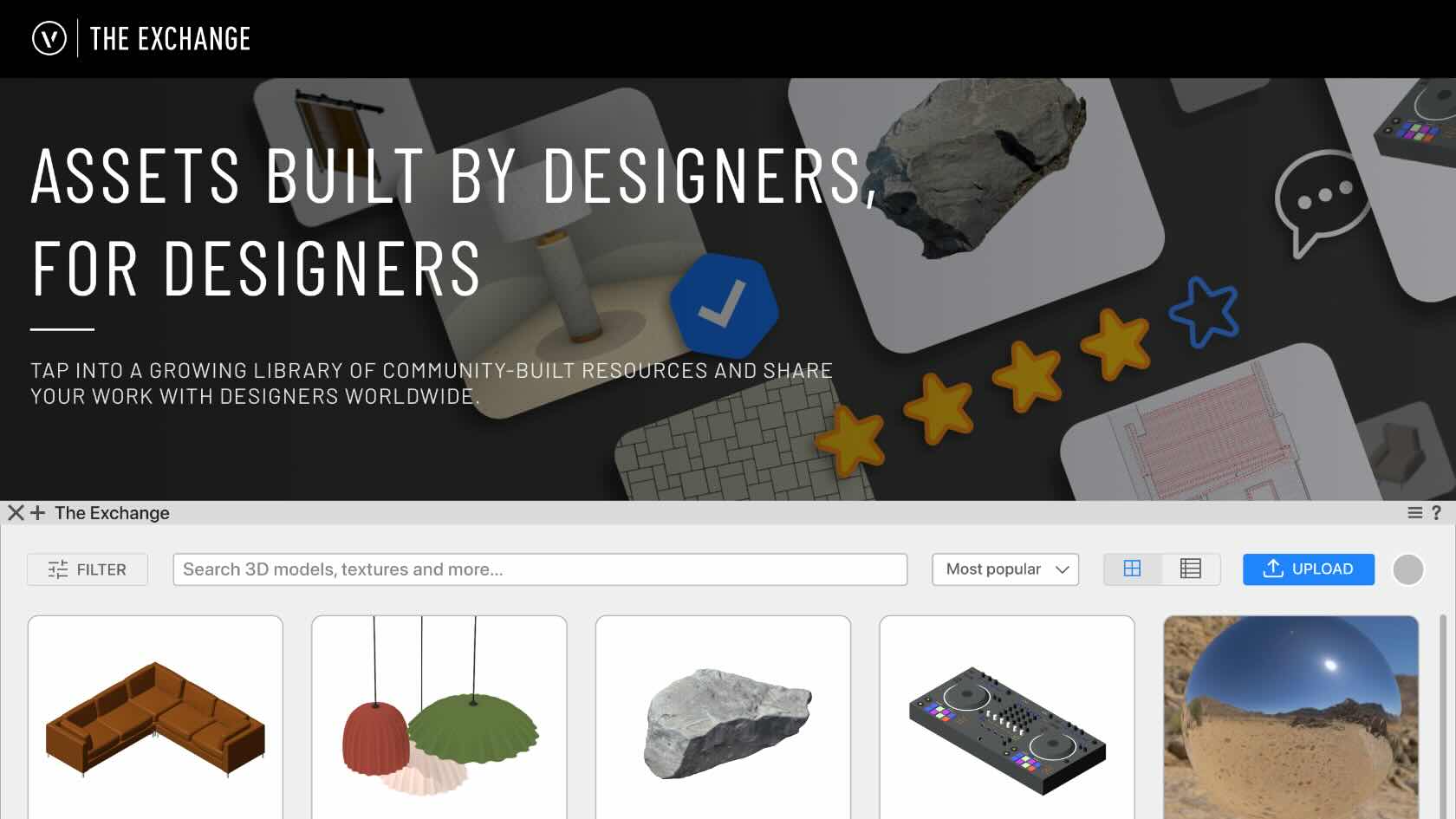
The Exchange is a community-driven platform for discovering, downloading, and sharing Vectorworks-ready design resources, including symbols, materials, hatches, textures, render styles, and much more. The Exchange is available both as a standalone website and as a web palette inside Vectorworks, so browsing and downloading resources directly into your Resource Manager without leaving your Vectorworks file is quick and easy. This video walks through searching and filtering the catalog, reviewing a resource's details and other metadata, importing a resource into your document, and sharing your own resources with the Vectorworks community.
All Industries
All Industries
8m
Beginner
Learning Objectives
Access the Exchange from both the standalone website and the web palette inside Vectorworks, and use search, sorting, filtering, and resource detail pages to find community-created resources.
Download resources from the website or import them directly into an open document through the palette so they appear in your Resource Manager.
Share your own resources on the Exchange by uploading from the Resource Manager or palette, configuring the thumbnail, tags, category, and description, and managing or deleting your published resources from your profile.
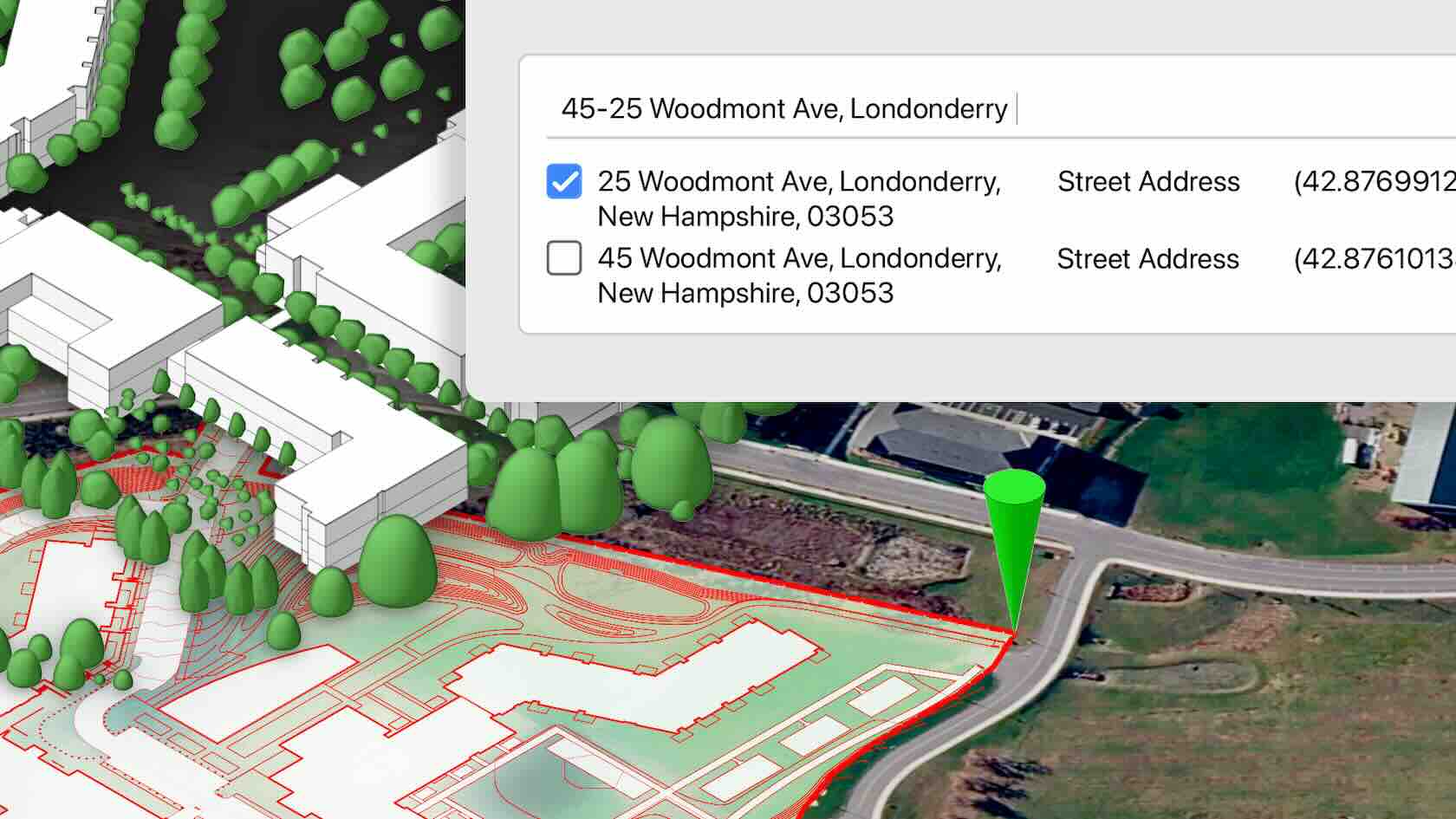
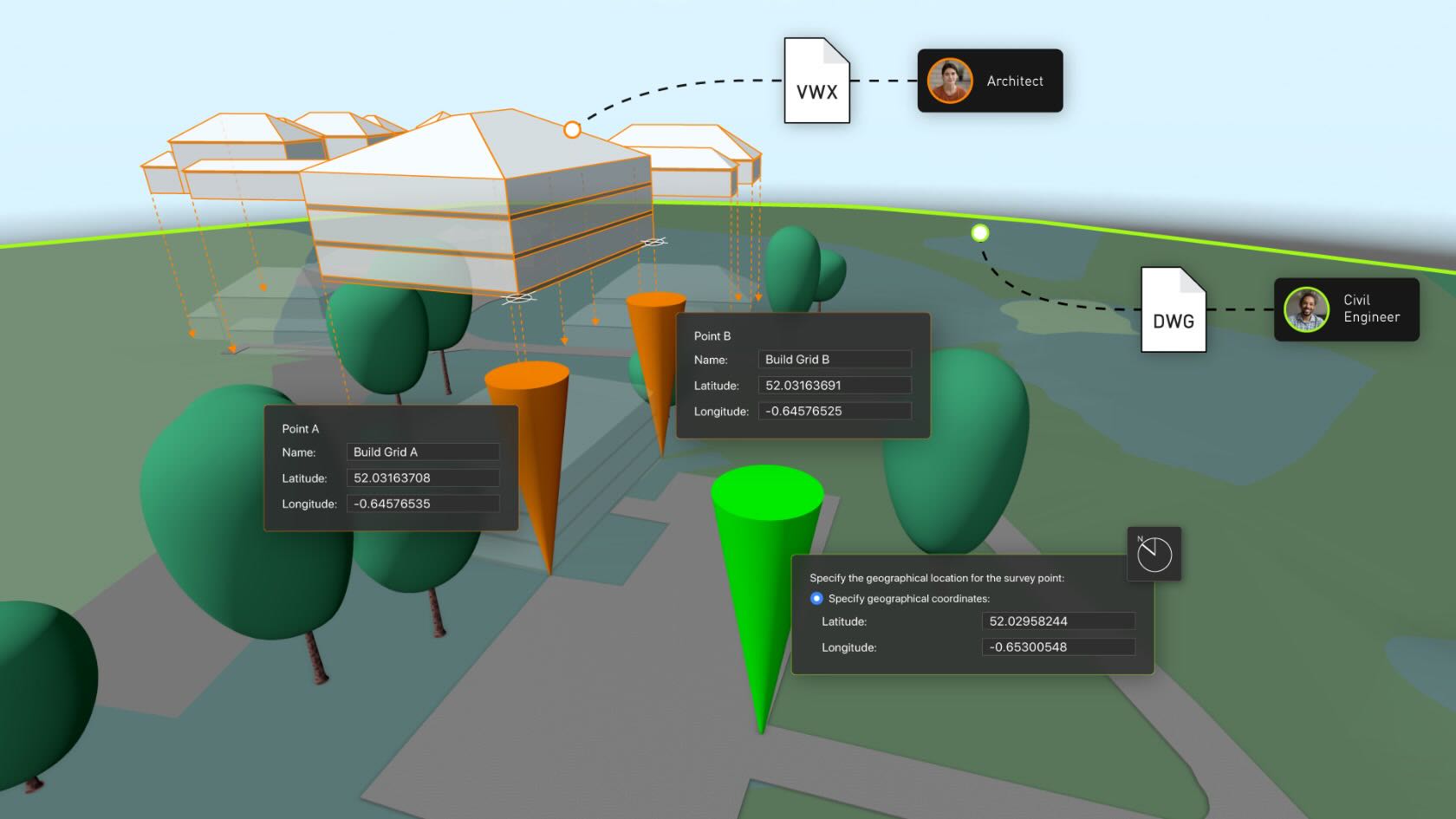
Anchor your Vectorworks model to its real-world position on the map without needing GIS expertise. With the Geolocation Setup Wizard, you can align satellite imagery, surveys, point clouds, and GIS layers around a single survey point. Move smoothly between local project coordinates and true geospatial positions as needed, and easily keep federated models aligned for coordination and review.
Landscapes
Landscapes
10m
Beginner
Learning Objectives
Georeference a blank Vectorworks file using the Geolocation Setup Wizard by entering a project address, selecting a coordinate reference system, positioning the base map, and placing a survey point.
Geolocate a file that already contains geometry — such as an imported survey DWG or an existing building model — by setting the correct CRS, angle from true north, and survey point alignment options without transforming existing objects.
Import georeferenced DWG, IFC, and point cloud files aligned to the document's georeferencing so consultant models and scans land in the correct real-world position and scale.
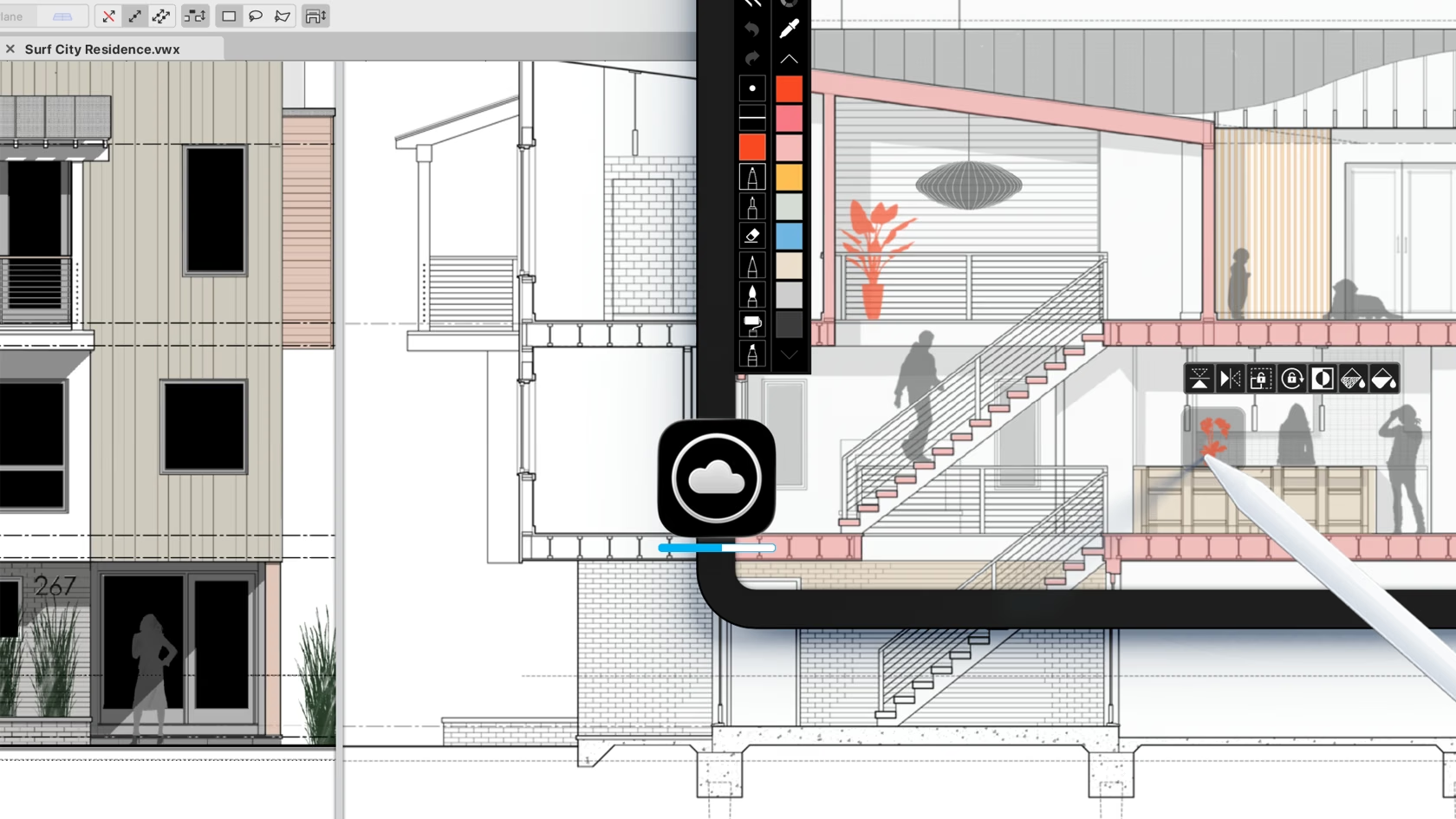
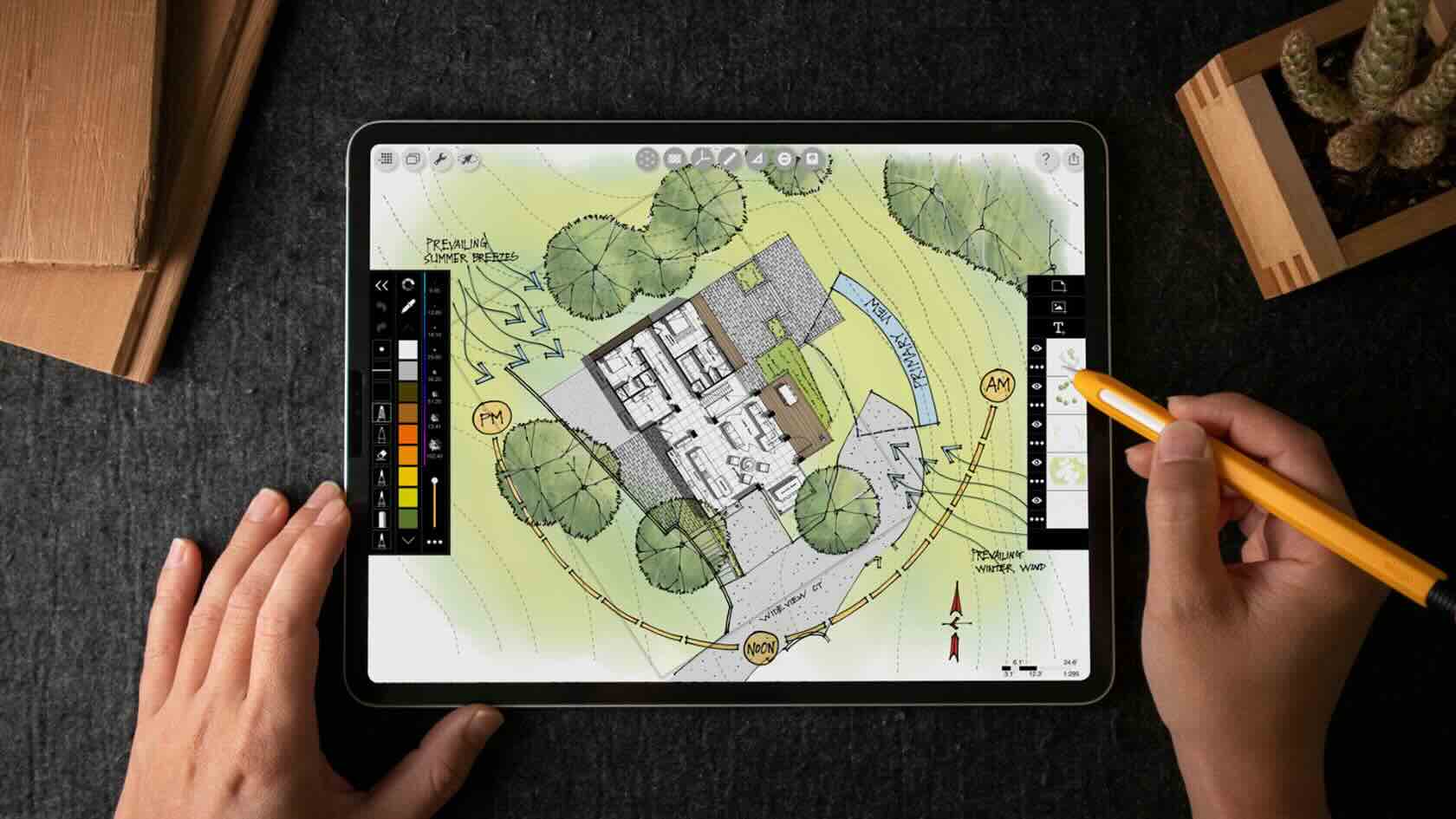
The Morpholio Trace integration with Vectorworks lets you sketch on your plans and other drawings by sending scale-accurate sheets or viewports via the cloud to your iPad. Sketch freely and then have your ideas flow straight back into your Vectorworks project as images or linework via DXF with less effort. No more manual juggling of PDFs, emails, and uploads simply to sketch by hand.
All Industries
All Industries
4m
Beginner
Learning Objectives
Explore the new Morpholio Trace integration released with Vectorworks 2026 Update 5.
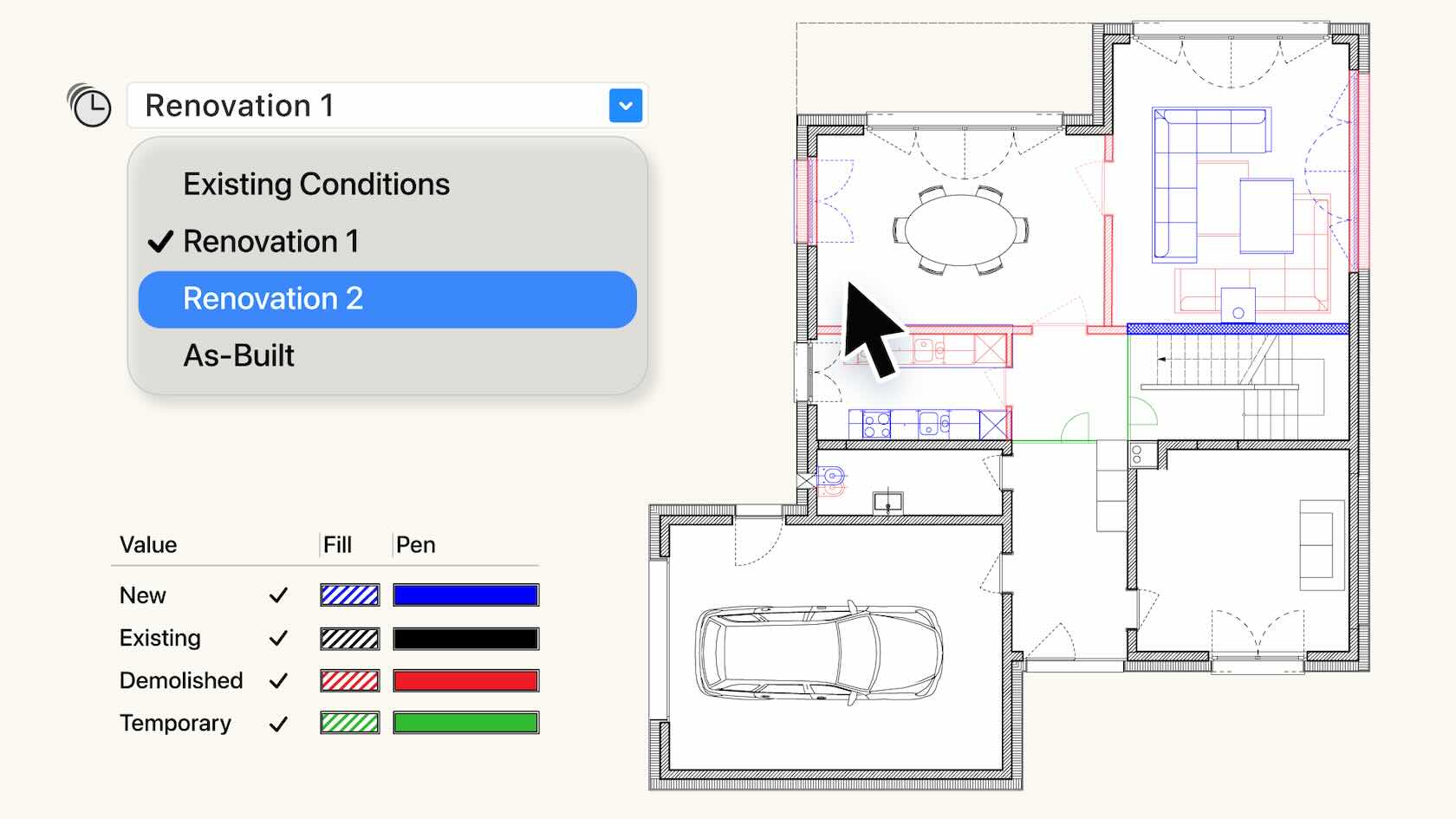
The comprehensive Phasing system tracks objects through time to align with construction conditions such as existing, demolition, temporary, or new. Effectively manage object status across multiple phases, and automatically create crystal-clear, phase-correct visuals, accurate documentation and reports. Phasing provides a single-truth, giving you the confidence to deliver high quality projects. Discover how to get started with this video.
Buildings/Interiors
Buildings/Interiors
15m
Intermediate
Learning Objectives
Identify the phase statuses in Vectorworks — existing, demolished, removed, new, temporary, and relocated — and set an object's Phase Created and Phase Removed parameters, including the reuse option, in the Object Info palette.
Manage project phases from the View bar by switching the active phase and using the Manage Phases dialog to insert, name, date, and merge phases.
Apply and customize data visualization sets (Phasing Complete, Demolition, New, All, and Current Only) to control object graphics and visibility, and use the Demolition tool, Phasing Removed Objects palette, and phase-specific viewports to produce coordinated renovation documentation.
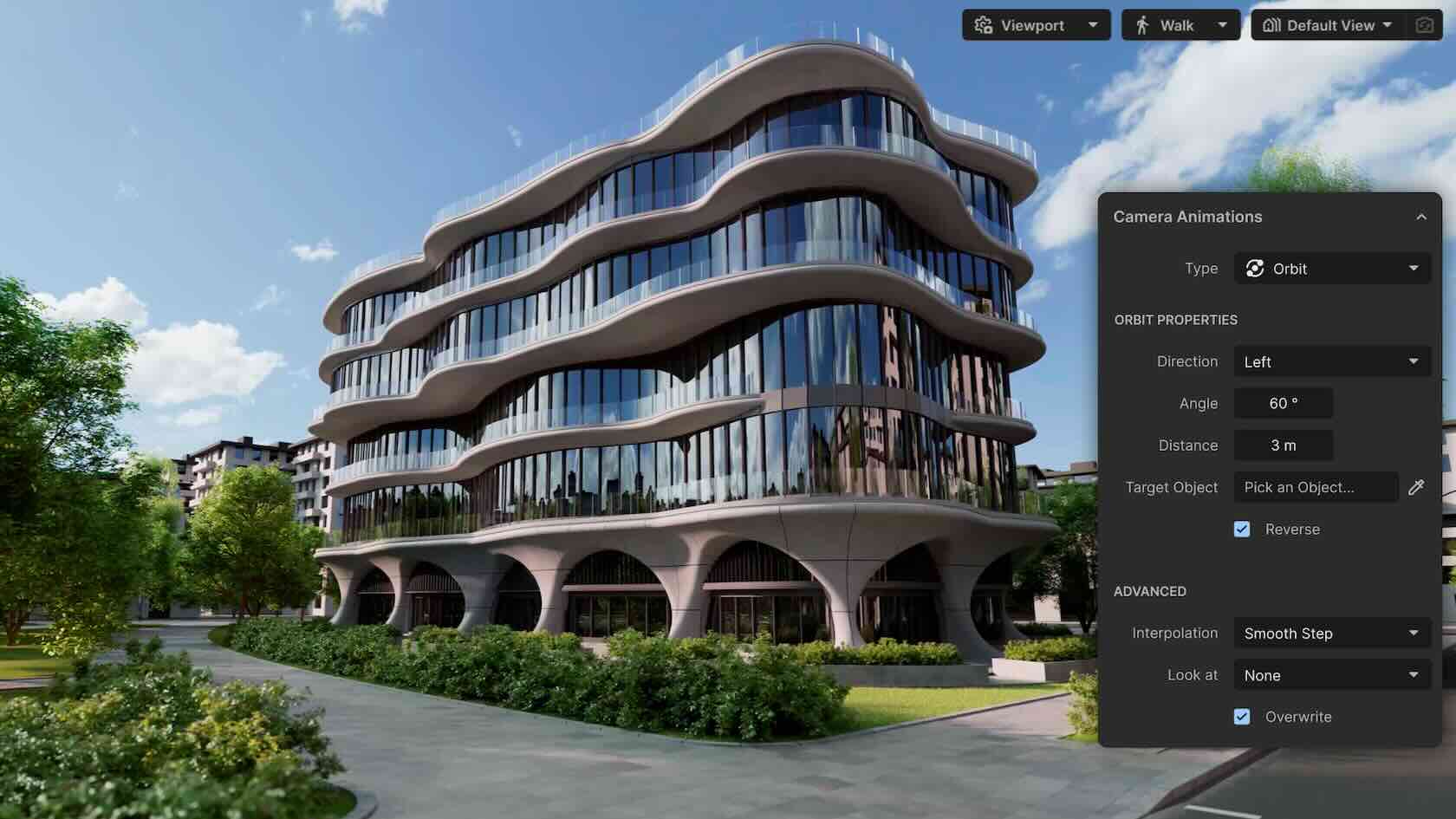
Redshift for Vectorworks provides stunning real-time visuals straight from your design with ease. Purpose-built by Maxon for Vectorworks AEC professionals, it sends your live model into a new, synchronized, dedicated, standalone, real-time renderer, providing fast, continuous visualization. Explore ideas instantly, present beautiful renderings, and trust that every view reflects your latest work. Log onto your customer portal to subscribe.
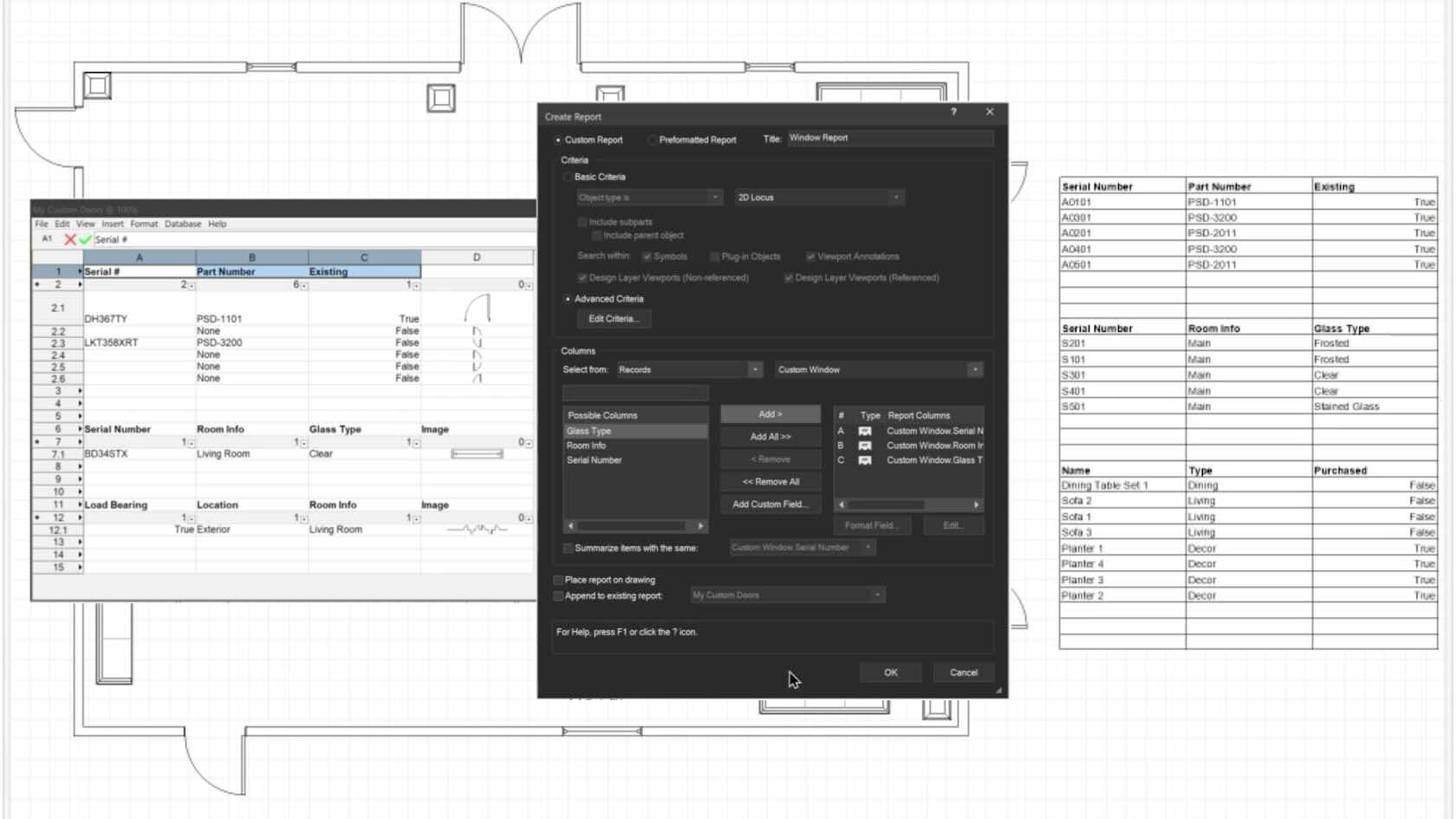
This on-demand class offers a comprehensive exploration of working with data in Vectorworks software, covering everything from built-in object parameters to advanced visualization and reporting techniques. Participants will start by examining the different types of native object data within the software, then progress to creating and attaching custom records for both simple and complex objects. The class will also demonstrate practical methods for viewing, managing, and presenting data using tools such as Data Visualization, Data Tags, and report generation. This class will develop your skills to structure, manage, and leverage object data effectively—ultimately boosting project efficiency, accuracy, and documentation quality.
All Industries
All Industries
2h 1m
Intermediate
Learning Objectives
Identify and utilize existing object data – Recognize different types of default object data, including 2D, hybrid, and complex objects, and navigate the Object Info Palette (OIP) and Resource Manager to explore attached records.
Create and attach custom records to objects – Develop and apply custom records to objects, incorporating various field types such as boolean values, text fields, and dropdown lists, and attach them using conventional methods.
Visualize and report data on drawings – Utilize Data Visualization and Data Tags to display object data within drawings, and generate both preformatted and custom reports for project documentation.
Join architectural designer, educator, and
digital workflow expert Henry Gao as he demonstrates three powerful workflows
that connect Morpholio Trace and Vectorworks into one seamless design process.
Drawing on his many years of experience
helping architects, interior designers, and landscape architects transition
from traditional hand drawing to efficient digital workflows, Henry will show
how sketching, redlining, and concept development can work hand in hand with
professional BIM and documentation tools. With real-world examples, you'll
learn how to mark up Vectorworks drawing sets in Morpholio Trace, send
revisions back for further development, create site and floor plans that can be
brought directly into Vectorworks, and sketch over 3D models to rapidly explore
and communicate design ideas. Plus, discover how integrating freehand
creativity with digital precision can help you iterate faster, improve
communication, and maintain design momentum from early concepts through project
development.
Whether you're new to the Morpholio Trace and
Vectorworks ecosystem—or looking to refine your workflow—this session will
provide practical techniques you can apply to your own projects immediately.
Buildings/Interiors
Buildings/Interiors
50m
Intermediate
Learning Objectives
Understand how to seamlessly bring
a PDF drawing set from Vectorworks to markup in Morpholio Trace with scale
tools.
Learn how to generate a scaled
site plan in Morpholio Trace and easily transfer the drawing as a vector-based
DXF file directly to Vectorworks for modeling.
Discover how to move 3D models
from Vectorworks to Morpholio Trace for concept sketches, markups, or base
sketches to generate AI renderings.
AutoCAD users are feeling the pressure to do more with less, consolidate software, and support 3D and BIM without derailing day-to-day work. A switch to Vectorworks is the right next step. Attend this webinar hosted by Luis Ruiz, lead product specialist at Vectorworks, to learn what it takes for a smooth transition.
Discover how Vectorworks provides a clear path to change at your own pace, with three solutions tailored to your design journey. We will explore adopting Vectorworks Fundamentals as your modern CAD alternative with purpose-built architectural tools, uncover the unique benefits of Vectorworks Architect, and review how to use the Vectorworks Design Suite for complex work. Plus, see how firms like yours have made the software transition to simplify processes, reduce complexity, and bring better designs to life through practical examples and customer stories.
Buildings
Buildings
32m
Beginner
Learning Objectives
Differentiate how Vectorworks Fundamentals, Architect, and Design Suite simplify workflows at different stages of adoption.
Identify multiple paths to adopting Vectorworks, from a low-risk start to higher-reward, fully integrated design and documentation workflows.
Understand how industry peers leverage Vectorworks to consolidate tools, streamline documentation, and elevate design quality.
Successful collaboration between designers and consultants using different software depends on reliable file exchange and effective communication. This one-hour webinar, designed for architects and landscape architects, explores how to manage projects effectively when collaborating with consultants, enhancing cross-platform coordination and best-practice workflows for interoperability between AutoCAD and Vectorworks.
Hosted by Vectorworks product specialists Luka Stefanovic and Marketa Hermova, attendees will gain practical insights for maintaining precision and consistency throughout the design and documentation process. Learn clear, repeatable workflows to improve the reliability and efficiency of drawing exchanges across design disciplines.
Buildings/Landscapes
Buildings/Landscapes
40m
Beginner
Learning Objectives
Understand the differences and similarities when setting up projects in AutoCAD and in Vectorworks.
Discover how to bring consultants’ DWG drawings into Vectorworks confidently.
Learn ways to successfully share work back with consultants who use AutoCAD.
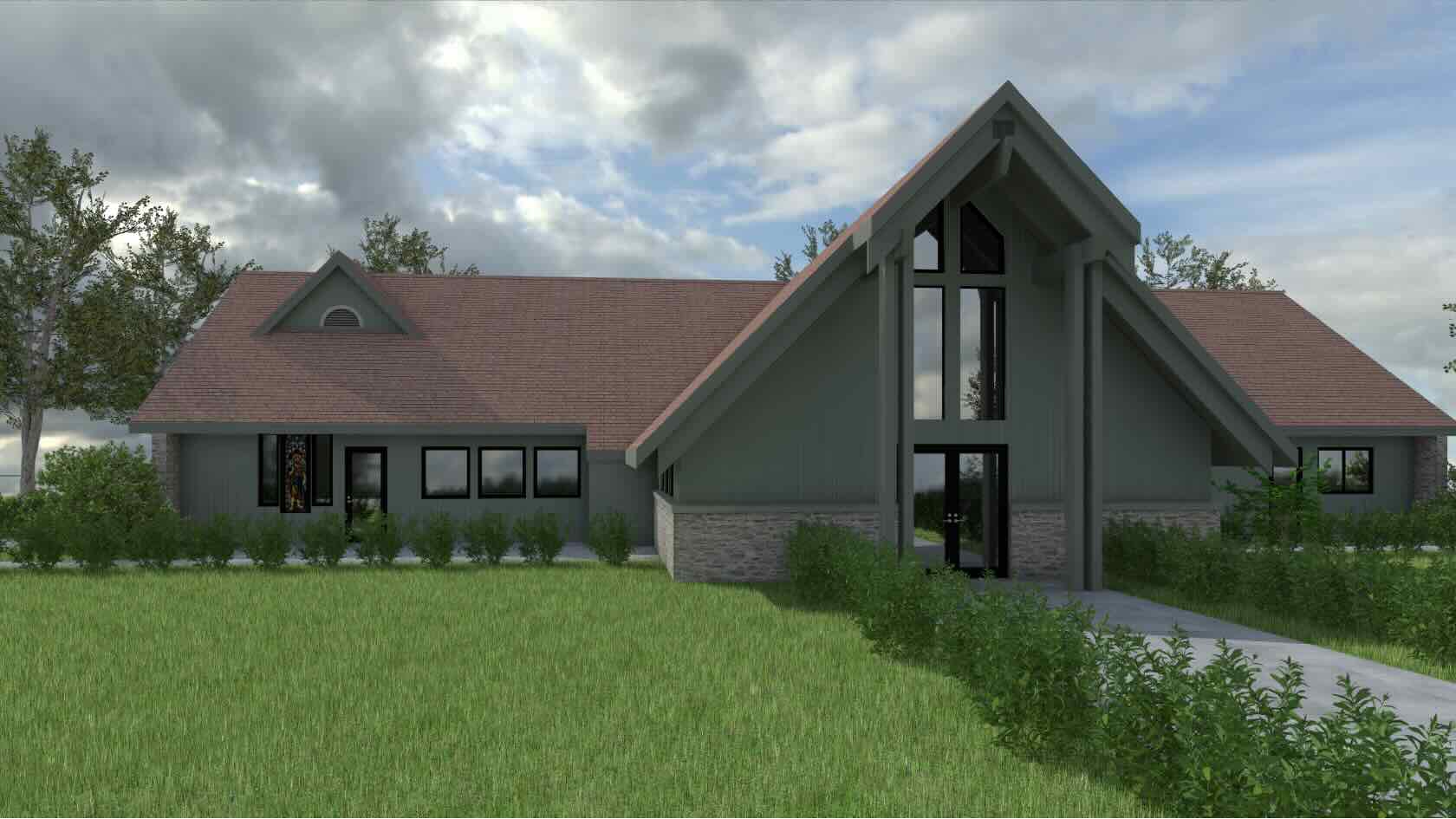
The most environmentally responsible building may be one
that’s already built.
In this webinar, learn how François Lévy, architect and principal
at François Lévy Architecture + Interiors, used BIM softwarwe to serve a church
congregation in its decision-making process regarding the fate of its damaged
parish hall. The firm used a variety of tools, such as Space objects,
worksheets, data visualization, and Point Cloud photogrammetry, to evaluate the
building rehabilitation and explore options to undertake the project
efficiently in phases.
To receive 1 AIA LU, 1 CORE AIBC LU, and 1 CORE AAA LEARNING HOUR please make sure to login and complete the quiz after watching our webinar.
Buildings
Buildings
45m
Beginner
Learning Objectives
Recognize the sustainability and community value of reusing existing
building stock.
Learn how effective BIM workflows, related to modeling and documenting
existing structures, facilitate building remodels and additions.
Understand how specific BIM tools can be used in harmony to improve
sustainable design outcomes.
Identify best practices for developing coordinated working drawings in a
hybrid 2D/3D digital platform.